A spread pick and roll that cuts the offense down to a single read. Simple and effective.
After the ball screen, the first screener gets a flare for a catch-and-shoot 3 while the second screener rolls to the rim.
Princeton Point offense principles adapted to a 5 out alignment, combining off-ball screens with the pick and roll.
The ball handler uses both Horns screens in sequence, attacking one way, then changing direction off the second screen.
A spread pick and roll from Horns with a backdoor cut option. Corner wings stay ready for kick-out 3s if their defenders help.
Over action from the Princeton Point series. Combines off-ball screens with a pick and roll, one of the series' basic actions.
Ball screen rules for the 5 out offense. Pass and follow with a ball screen, the roll acts like a cut and everyone rotates.
The ball handler uses one ball screen, then a quick second screen from the other side. Two screens in a row are hard to defend.
A Horns ball screen where one big rolls and the other pops, giving the ball handler a three-man read.
Ball screen rules for the 4 out offense. Pass and follow with a ball screen, and treat the roll like any other basket cut.
A flare screen into a slip to the rim. Simple, and strong against switching defenses.
A sudden double team on the ball handler during the screen. Often effective at lower levels, where ball handlers struggle with pressure.
A double drag screen in early offense that opens the middle for the point guard and often leaves the corner shooter open.
Mavericks action where Powell screens off the ball for Luka, then turns and sets a ball screen for a pick and roll attack on the rim.
Both defenders switch assignments on the ball screen. The simplest pick and roll coverage to execute.
A pick and roll coverage that puts immediate pressure on the ball handler to force quick passes or turnovers.
Ice coverage, also called Blue, Down or Push, forces the ball handler to the sideline instead of the middle.
Drag screen in the 4 out transition flow. A trailing big sets a ball screen early in transition for a quick pick and roll attack.
A drop coverage where the screener's defender sits near the nail, sometimes deeper in the paint.
Forces the ball handler to their weak hand on middle ball screens. Usually paired with Ice on side screens.
Ways to attack Switch coverage beyond hunting mismatches, against the most common screen defense in the pros.
Why the 45-degree screen angle, with the screener's back to the corner, works so well for on-ball screens.
Ways to beat a Blitz, where both defenders trap the ball handler. Aggressive traps can be easier to exploit than Hedge.
A drop coverage with the screener's defender playing higher, making the ball handler easier to contain than in a low drop.
Ways to attack Hedge coverage, which pressures the ball handler to give up the ball early or stall the offense.
Ways to attack High Drop coverage, which protects the rim and gives up long twos while fixing the spacing gaps of a Low Drop.
Ways to attack Low Drop coverage, where the screener's defender sits deep in the paint and concedes the long two.
Ways to attack Ice coverage, where the on-ball defender jumps the screen and forces the ball handler to the sideline.
Ways to attack Weak coverage, which forces the ball handler to their weaker hand, usually left, on middle screens.
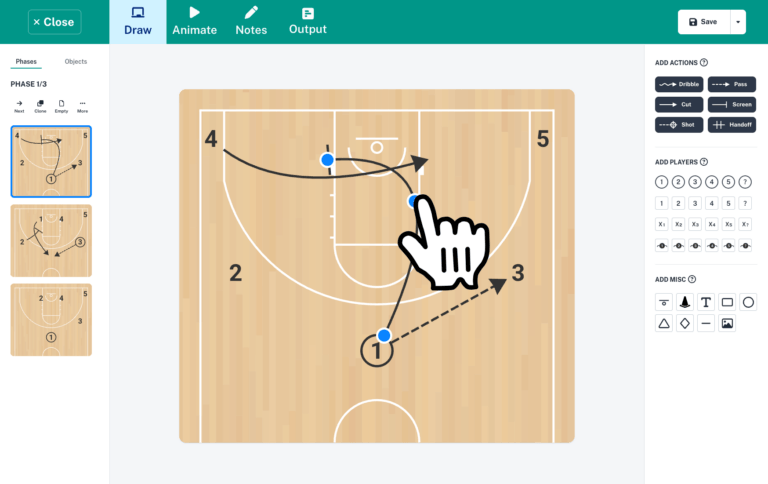
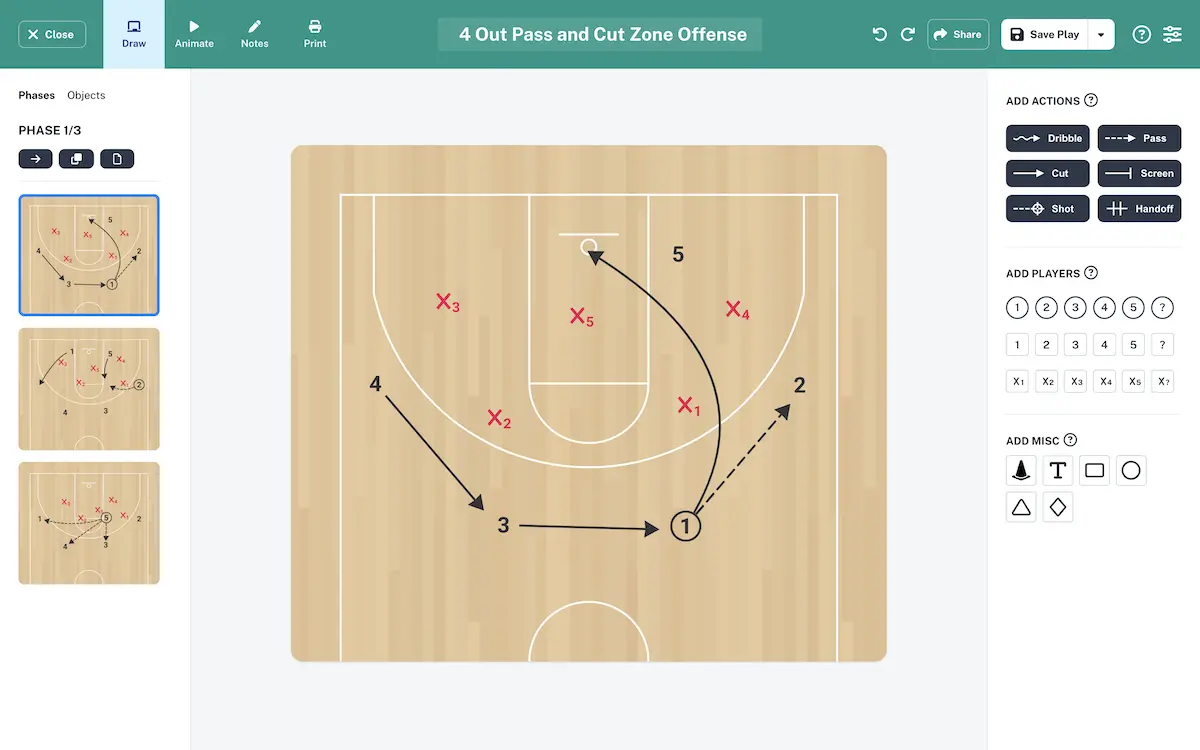
Create plays with our intuitive drag & drop editor.
Your plays will be animated automatically!
© 2026. The Hoops Geek